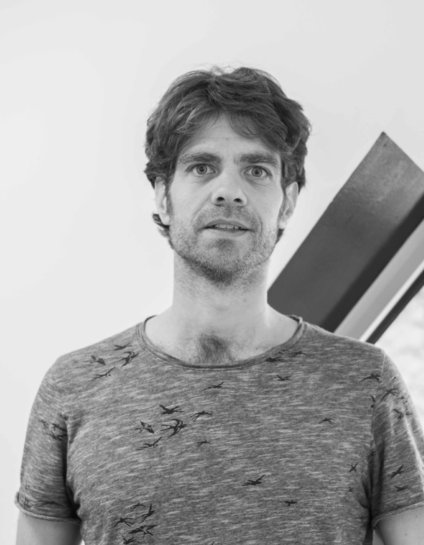
Ralf Kurvers
Ralf is the PI of the research group. Ralf did his PhD in behavioral ecology at the Wageningen University, studying the role of individual differences in social information use and collective movement in bird flocks. After his PhD, Ralf joined the lab of Jens Krause as a postdoc working on collective decision making in fish and human groups. In 2016 Ralf established his own research group at the MPIB where he works at the interface of behavioral ecology, social psychology and collective behavior. Ralf is also a PI in the Science of Intelligence Excellence Cluster, and a guest researcher at the Leibniz Institute of Freshwater Ecology and Inland Fisheries.
Marina Papadopoulou (postdoc)
Marina is a theoretical biologist with expertise in self-organized social systems. Her work focuses on the collective behavior of animals, including fish schools, bird flocks and baboon troops and aims to understand how complex spatio-temporal patterns emerge in nature. She combines the analysis of empirical data with the development of agent-based models based on self-organization. Marina was awarded a 2 year postdoctoral Humboldt Research Fellowship to work with us on the collective dynamics in fish schools and human foraging.

Kiri Kuroda (postdoc)
Kiri obtained his PhD in Social Psychology from the University of Tokyo and is interested in social and collective decision-making in humans, and studies these processes using behavioral experiments, eye-tracking, and cognitive modeling. Kiri has joined the lab early 2023 for a 3-year postdoc funded by the Japan Foundation. In his work with us, Kiri investigates how individuals in groups coordinate their decision timing using behavioral experiments and cognitive modeling.
Marwa Kavelaars (postdoc)
Marwa is a behavioral biologist specializing in movement ecology and foraging behavior. For her PhD at the University of Antwerp, Marwa worked on these topics in seabirds, using GPS tracking and behavioral observations. In her work with us, Marwa is studying the movement patters and foraging decisions of large groups of icefishers in competitive and cooperative settings, funded by the Walter Benjamin Program (DFG).

Nikolas Zöller (postdoc)
Nikolas did a masters in physics at the Free University in Berlin and a PhD in data engineering from the Jacobs University Bremen, working on a computational social science approach to understand online collaboration. With us, Nikolas is working on harnessing collective and artificial intelligence in open-ended medical diagnostics within the HACID project, employing network science, LLMs as well as computational social science approaches.
Félicie Dhellemmes (postdoc)
Félicie is a behavioral ecologist interested in the causes and consequences of consistent individual differences in behavior. For her PhD, Félicie studied the role of individual differences in space use and fitness in juvenile lemon sharks at the Bahamas. For her first postdoc, she studied the spatial movement of pike in Northern Germany using acoustic telemetry. With us, Félicie is working on quantifying the interplay between the collective hunting of icefishers, and the collective evasion of the prey schools under the ice within the Science of Intelligence Excellence Cluster.

Shweta Suran (postdoc)
Shweta completed her PhD in Computer Science at the Department of Software Science at Tallinn University of Technology in Estonia developing a generic framework for collective intelligence systems. Shweta is interested in collective intelligence, collective behavior, social network analysis, data mining, and digital image processing. With us, Shweta is extending her (already very broad) expertise by studying human cognitive factors at play in online environments on a Marie Skłodowska-Curie postdoctoral fellowship.
Mubashir Sultan (phd + postdoc)
Mubashir (Mubs) holds an MSc in Cultural Psychology (Univ of Amsterdam) and an MSc in Brain and Cognitive Sciences (Univ of Amsterdam). Mubs research interest are social decision making with a focus on experimental methods and computational modeling. For his PhD, Mubs is studying the main drivers of misinformation, using behavioral experiments, cognitive modeling, and as of late, a meta-analysis approach, studying the overarching drivers of misinformation susceptibility. After submitting his dissertation, Mubs is continuing with us as a Postdoc in collaboration with the Connected Minds Lab from the Univ of Amsterdam.
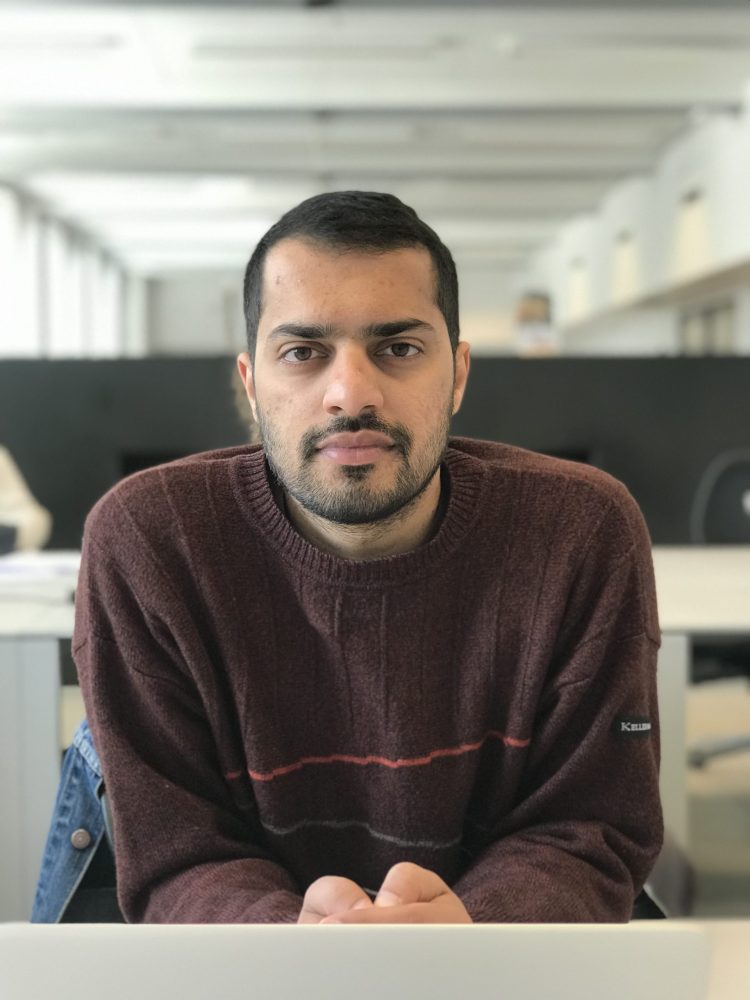

Julian Berger (phd + postdoc)
Julian holds an MSc in Psychology in Business and Economics (Univ Catolica Portuguesa, Lisbon). Julian’s research interest are the psychology of decision making in social settings and institutions, wisdom of crowds and policy implications, interventions and aggregation mechanisms for improved group performance, development of open science and meta-science. In his PhD, Julian was studying collective intelligence and fast-and-frugal heuristics in medical diagnostics, with a focus on diagnosing mental disorders. After submitting his dissertation , Julian is continuing with us as a Postdoc, but will soon be leaving us and start as an Ass. Prof. in Barcelona.
Alexander Schakowski (phd + postdoc)
Alex conducted a Master in Psychology at the Heidelberg University. Alex has a broad interest in social behavior and social cognition, and is especially interested in how techniques from cognitive psychology can be applied to study social decision making. In his PhD, Alex was studying the socio-ecological drivers of human foraging in the wild, gathering data on a novel human foraging system, namely icefishers in Finland. After submitting his dissertation, Alex is continuing with us as a Postdoc.

Valerii Chirkov (PhD student)
Valerii studied Clinical Psychology as his first Master degree and Cognitive Neuroscience at the Humboldt University in Berlin as a second master’s degree. Valerii completed his master thesis with us studying the evolution of signaling in collective resource tracking, using agent based models and immersive reality experiments in Unity. After his masters, Valerii continued as a PhD student with us, in collaboration with the Science of Intelligence Excellence Cluster (with Pawel Romanczuk as main supervisor) studying collective information processing in synthetic agents.
Ilse Pit (PhD student)
Ilse is conducting her PhD at the School of Anthropology & Museum Ethnography at the University of Oxford, focusing on how human cooperation between people of different groups is influenced by how typical individuals are for their group. Ilse joined the research group (with a Leverhulme Trust fellowship) to study how the social media environment influences the cognitive processes when judging online misinformation veracity.

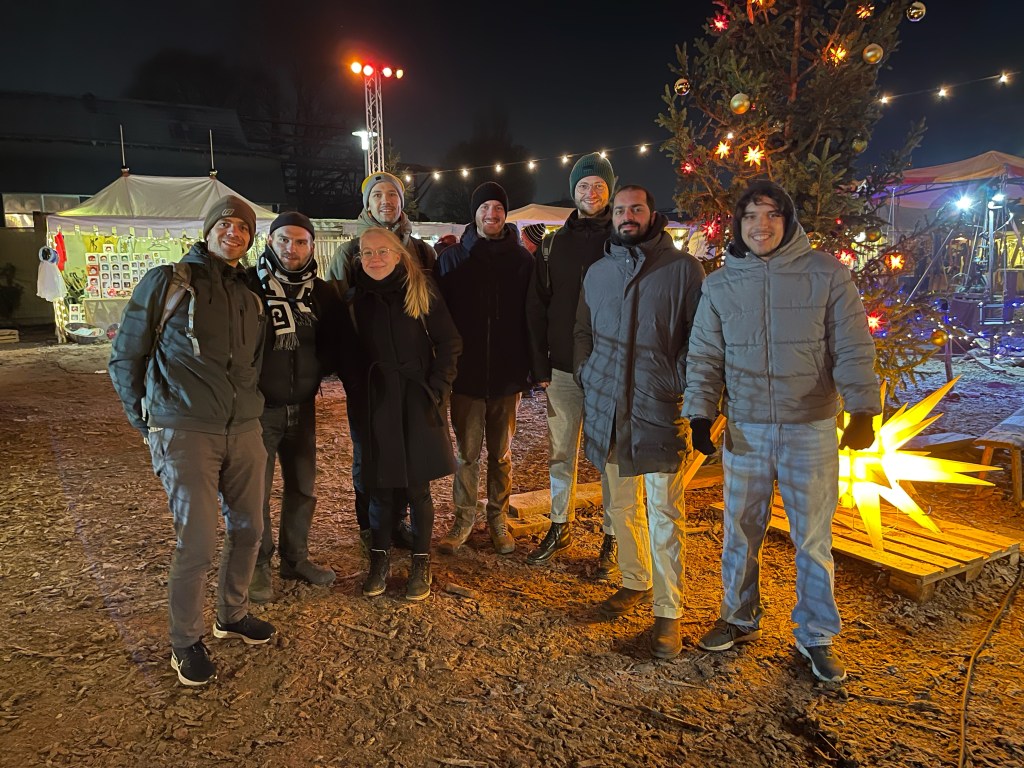

If you are interested in the work we do and joining the group or collaborating, please get in touch.
Previous members

Dominik Deffner (postdoc)
Dominik worked in our group for 3 years as a Postdoc, studying human collective foraging in immerse environments and in the icefishing project . This was a hybrid position together with the Excellence Cluster Science of Intelligence at the TU Berlin and part of a larger project investigating collective search in analytic (humans) and synthetic systems (robots). After his postdoc position, Dominik started a W1 Professor position in Computational Modeling at the Marburg University. Website

Alan Tump (PhD and postdoc)
Alan finished his PhD in our research group in which he investigated the cognitive mechanisms underlying decision making in human collectives. After that, Alan continued his research with us as a Postdoc further expanding his exciting work on applying social drift diffusion models to social systems to uncover the temporal dynamics of collectives. This was a hybrid position together with the Excellence Cluster Science of Intelligence at the TU Berlin. After his postdoc, Alan started a position as data scientist at the Robert Koch Institute. Website
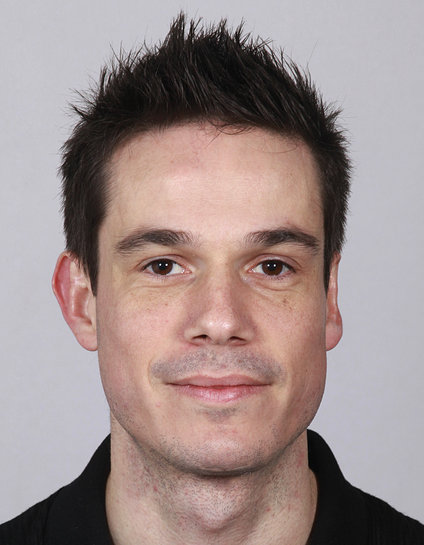
Bertrand Jayles (postdoc)
After completing his PhD in social physics at Toulouse university, studying collective human behavior using techniques from statistical physics, Bertrand joined our group as a postdoc. During his stay with us Bertrand focused on collective intelligence, social influence and cognitive biases in human groups. After spending three years with us Bertrand moved to the Singapore University for his next postdoc in cooperation with the ETH in Zurich. Website
 Ralf Kurvers